The Hidden Tax on Your International Shipments: Why Multi-Hub Freight Models Are Costing You More Than You Think

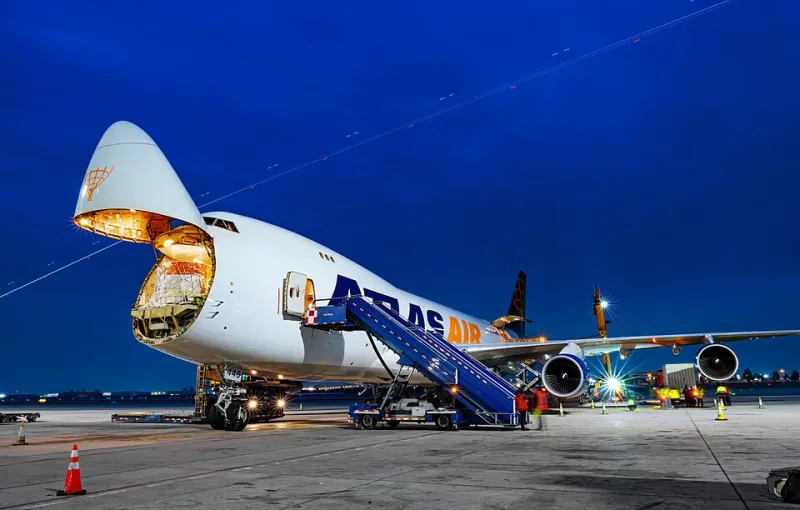
Photo: Smparceltracking, CC BY-SA 4.0, via Wikimedia Commons
There is a peculiar assumption embedded in how most American businesses think about international shipping: that complexity is inevitable. That a package originating in Santiago, Chile, must pass through Miami, then perhaps Dallas, before it finally reaches a warehouse in Columbus, Ohio, is treated as a law of nature rather than a choice with real commercial consequences.
It is not a law of nature. It is a legacy architecture — one built for a different era of global trade, maintained by institutional inertia, and quietly imposing what amounts to a hidden tax on every international shipment that passes through it.
Understanding the Multi-Hub Problem
Conventional international freight consolidation works on a hub-and-spoke logic borrowed from the airline industry. Shipments from a given origin region are gathered at a regional hub, consolidated with other cargo, and then routed through one or more additional distribution nodes before reaching their US destination.
The appeal of this model is efficiency at scale — for the freight carrier. When a single hub processes enormous volumes of cargo from multiple origins, the carrier's per-unit handling costs decrease. Those savings, in theory, are passed along to shippers. In practice, what gets passed along most reliably is not savings but delays.
Consider the arithmetic of a typical multi-hub shipment from Santiago to a US destination. The cargo departs STG, arrives at a regional consolidation hub — frequently in Miami or Houston for South American freight — and enters a queue. That queue is managed by the hub's operational priorities, not yours. Your shipment waits until enough compatible cargo has accumulated to justify the next leg of the journey. Then it moves, arrives at a secondary distribution facility, waits again, and eventually reaches its destination.
At each of these transition points, several things can go wrong. Documentation can be flagged. Cargo can be misrouted. Customs holds — often triggered by paperwork inconsistencies introduced during hub transfers — can add days to a timeline that was already generous with your patience.
The Real Cost of Delivery Windows
Delivery window reliability is arguably the most undervalued metric in international logistics. Most businesses evaluate shipping costs on a per-pound or per-cubic-meter basis and give relatively little formal attention to the variance in delivery times — the difference between the best-case and worst-case scenario for a given shipment.
This is a significant analytical error. Variance in delivery windows creates inventory management problems that are often more expensive than the shipping cost differential between a slower, cheaper service and a faster, more reliable one.
An e-commerce business importing goods from Santiago on a multi-hub routing might be quoted an estimated transit time of 12 to 18 business days. That six-day variance is not a minor inconvenience — it is the difference between receiving stock in time for a promotional campaign and missing the window entirely. It is the difference between maintaining healthy Amazon FBA inventory levels and triggering stockout penalties that cost more than the shipping savings ever provided.
Direct express routes from Santiago to US destinations operate on fundamentally different variance profiles. When cargo moves through fewer hands and fewer intermediate nodes, the number of opportunities for delay decreases proportionally. A direct STG-to-US express service with a five-to-seven business day window is not merely faster in absolute terms — it is more predictable, and predictability is what allows a business to plan.
What Happens at Every Extra Hub
It is worth being specific about what each additional hub in a freight journey actually introduces, because the abstract language of "delays" and "inefficiencies" can obscure the concrete mechanisms at work.
Documentation risk compounds with every transfer. Each hub requires its own set of handling records, and each transfer between carriers or handling agents is an opportunity for information to be transcribed incorrectly, omitted, or formatted in ways that create friction at the next checkpoint. US Customs and Border Protection clearance is particularly sensitive to documentation accuracy — a single field error on a commercial invoice can trigger a hold that adds two to four business days to a shipment's journey.
Physical handling damage increases with every loading and unloading cycle. Cargo that is handled twice arrives in better condition than cargo handled six times. For businesses importing fragile goods, specialty products, or items with packaging that matters for customer experience, this is not a trivial consideration.
Accountability gaps widen as the chain of custody extends. When a shipment moves through three carriers across four facilities, determining responsibility for a damaged or missing item becomes a negotiation between parties who all have financial incentives to point at someone else. Direct routing consolidates accountability in ways that make claims resolution faster and outcomes more favorable to the shipper.
The Direct Route Argument in Practice
The case for direct express corridors between Santiago and US destinations is not theoretical — it is playing out in the operational decisions of US importers who have made the comparison with their own shipments.
Businesses that have transitioned from multi-hub consolidation services to direct STG-to-US express routing consistently report three categories of improvement. First, transit times decrease — typically by 30 to 50 percent compared to traditional consolidation services. Second, delivery window variance narrows, enabling tighter inventory management and more confident promotional planning. Third, customs clearance rates improve, because documentation prepared specifically for the US import process by logistics providers with deep CBP expertise moves through the clearance process more smoothly than paperwork assembled across multiple international handoffs.
The cost comparison is more nuanced than a simple rate sheet analysis suggests. Direct express services carry higher per-unit rates than consolidation freight in many cases. However, when businesses account for the full cost of their shipping model — including inventory carrying costs driven by unpredictable delivery windows, stockout penalties, damage claims, and the staff time consumed managing exceptions — the total cost picture frequently favors the direct route.
Rethinking the Santiago-to-US Corridor
For US businesses with meaningful sourcing activity in Chile, the Santiago-to-US logistics corridor deserves strategic attention rather than tactical optimization. The question is not simply which carrier offers the lowest rate on a given shipment — it is which logistics model best supports the business's operational requirements and growth trajectory.
Direct express routes from Santiago represent a structural advantage for businesses that prioritize reliability, speed, and supply chain resilience. As US importers continue to diversify their sourcing away from single-region dependencies, the ability to move goods from STG to US destinations with speed and certainty will become an increasingly meaningful competitive differentiator.
The multi-hub model had its era. For the demands of modern US e-commerce and import businesses, the future runs direct.