Cold Cargo, Hot Demand: How Santiago's Temperature-Controlled Logistics Are Reshaping What US Importers Can Source
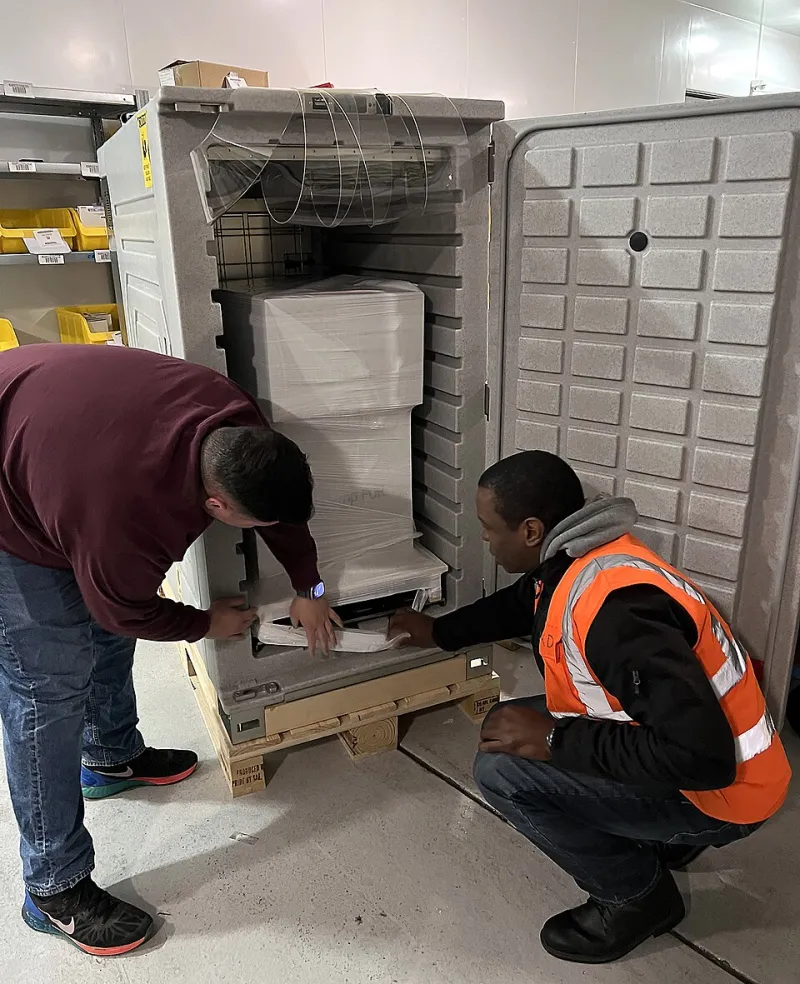
Photo: U.S. Army AMLC by [null Courtesy], Public domain, via Wikimedia Commons
Shelf life is a form of currency. For US importers of perishable goods—whether they operate in fresh produce, specialty foods, pharmaceuticals, or life sciences—every hour a product spends in transit is an hour subtracted from its commercial value. The logistics infrastructure connecting origin to destination is not merely a cost center; it is a direct determinant of what can be sourced, at what margin, and with what degree of reliability.
Against that backdrop, Santiago's emergence as a serious cold-chain logistics hub deserves more attention than it has received in US supply chain circles. Chile's capital has developed temperature-controlled freight capabilities that are, by South American standards, sophisticated—and by global standards, increasingly competitive. For US importers whose profitability depends on product integrity across long distances, the Santiago cold corridor is opening sourcing options that were previously constrained by logistics limitations rather than by supply or demand.
The Infrastructure Behind the Capability
Chile's cold-chain development did not happen by accident. It was driven, in large part, by the country's position as one of the world's leading exporters of fresh fruit. Chile supplies a substantial share of the off-season blueberries, grapes, cherries, and avocados consumed in the United States, and sustaining that trade across a 7,000-mile supply chain required the construction of refrigerated warehousing, temperature-monitored transport fleets, and cold-capable air freight facilities that meet exacting international standards.
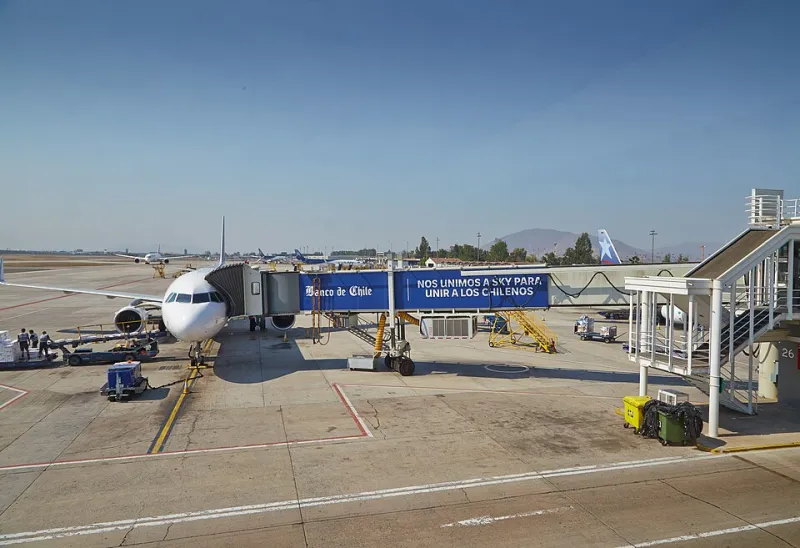
Santiago's Arturo Merino Benítez International Airport has expanded its cold-cargo handling capacity significantly over the past decade. Dedicated perishables terminals with pre-cooling facilities, continuous temperature monitoring, and rapid transfer protocols reduce the thermal exposure that perishables experience during the critical airport-to-aircraft transition. The airport's cargo operators have invested in equipment and training aligned with IATA's Perishable Cargo Regulations, providing US importers with a baseline of process discipline that is not always available at other South American departure points.
Beyond the airport, Santiago's logistics ecosystem includes a growing number of GDP-compliant cold storage facilities—a standard originally developed for pharmaceutical distribution that is now being applied more broadly to high-value perishables. These facilities maintain validated temperature ranges, provide continuous data logging, and generate the documentation trails that US Food and Drug Administration and US Department of Agriculture import requirements increasingly demand.
Fresh Produce: The Established Case
For fresh produce importers, the Santiago cold corridor is not new—but its efficiency is improving in ways that are meaningfully expanding the economics of Chilean sourcing. Chilean blueberries, for example, compete directly with domestic US production during the northern hemisphere's off-season. The margin available to importers depends heavily on how much of the fruit's shelf life survives the journey.
Historically, air freight was the only viable option for premium blueberries destined for US grocery retail. The cost of air freight is substantial—typically five to ten times the cost of ocean freight on a per-kilogram basis—but it was accepted as the price of speed. What Santiago's logistics operators have been developing is a tiered model: express air freight for the highest-value, shortest-shelf-life product, and temperature-optimized ocean freight with accelerated port handling for volume product where a slightly longer transit is commercially acceptable.
The ocean option, when executed with rigorous temperature control and efficient port clearance, can deliver Chilean blueberries to US distribution centers in 10 to 14 days from harvest—a timeline that preserves adequate retail shelf life while cutting freight cost dramatically. US importers who have piloted this approach report that the savings on ocean freight, even after accounting for the additional cold-chain management costs, generate margin improvements that are significant enough to alter their sourcing mix.
Avocados follow a similar pattern. Chilean Hass avocados are harvested during a window that partially overlaps with Mexican production but extends into periods when Mexican supply tightens. US importers who have established cold-chain relationships in Santiago are able to bridge supply gaps with Chilean product that arrives in better condition than earlier routing attempts—before Santiago's infrastructure matured—would have suggested was possible.
Pharmaceuticals and Biotech: The Higher-Stakes Application
If the produce case demonstrates Santiago's cold-chain competence, the pharmaceutical and biotech application demonstrates its ambition. Temperature-sensitive pharmaceutical products—biologics, vaccines, certain diagnostics, and clinical trial materials—require cold-chain management that is categorically more demanding than fresh fruit. The consequences of a temperature excursion are not measured in reduced shelf life but in product loss, regulatory non-compliance, and, in clinical contexts, potential patient safety implications.
Chile has a small but growing pharmaceutical manufacturing sector, and several US biotech companies have established sourcing or clinical supply relationships with Chilean partners. Moving biological samples, reference standards, or investigational drug products from Santiago to US research facilities or distribution centers requires a logistics chain with validated temperature control, documented chain of custody, and the ability to meet FDA import requirements for pharmaceutical products.
Santiago's logistics operators serving this segment have invested in specialized packaging systems—including phase-change materials and active temperature-controlled containers—that maintain product integrity across the extended transit times involved in intercontinental shipment. Several operators have obtained or are pursuing IATA CEIV Pharma certification, an industry credential that validates cold-chain competency specifically for pharmaceutical air cargo.
For US biotech companies managing clinical trials with South American patient populations, or sourcing biological materials from Chilean research institutions, the availability of certified cold-chain logistics in Santiago is not a convenience—it is a prerequisite for conducting the work at all.
The Cost Calculus: When Express Cold-Chain Beats Pure Air Freight
A common assumption among US logistics managers is that cold-chain competency and speed are necessarily in tension—that reliable temperature control requires slower, more deliberate handling that adds transit time. Santiago's evolving model challenges that assumption.
By combining pre-cooled airport handling, optimized flight routing to US gateway cities, and coordinated customs clearance, Santiago-based operators are delivering temperature-controlled express freight to US destinations in transit windows that were previously achievable only through pure air freight—but at cost structures that reflect the efficiency gains of a more developed infrastructure.
The comparison point matters. For a US importer currently moving high-value perishables from South America via a connecting hub in Europe or through a less-developed regional airport, the Santiago direct corridor can offer both better cost and better temperature performance. The consolidation of cargo volume through Santiago also gives shippers negotiating leverage with carriers that fragmented, multi-origin routing does not provide.
Why This Corridor Is Becoming Strategically Important
The US food retail and pharmaceutical distribution landscapes are both moving in directions that increase the strategic value of capable cold-chain logistics corridors. Consumer demand for year-round fresh produce, the growth of specialty and functional foods, and the expansion of biologics in the pharmaceutical market all increase the volume of temperature-sensitive goods that US importers need to move reliably.
Santiago's cold-chain infrastructure—built on a foundation of fresh produce export but increasingly extended to pharmaceutical and biotech applications—positions the corridor as a durable logistics asset rather than a niche solution. For US importers whose sourcing strategies are constrained by logistics limitations, the question is no longer whether Santiago can handle temperature-sensitive freight. The question is whether their current logistics partners are positioned to take advantage of what Santiago now offers.