When Hours Matter: How Express Freight from Santiago Is Rewriting the Inventory Playbook for US Retailers
Inventory has always been a bet. Every unit a retailer holds in a warehouse represents a wager that demand will materialize before the carrying costs, markdown risk, or obsolescence erodes the margin. For US retailers sourcing seasonal goods from South America, that bet has historically been placed weeks — sometimes months — in advance, with little ability to course-correct once a purchase order was issued and a container sealed.
Express freight from Santiago is changing the terms of that wager.
The Timeline Problem That Standard Freight Creates
Conventional ocean freight from Chile to the United States operates on a rhythm that most supply chain managers know by heart: 18 to 25 days on the water, plus pre-shipment handling, port processing on both ends, customs clearance, and last-mile delivery. When everything runs smoothly, a retailer might see goods move from a Santiago warehouse to a US distribution center in 28 to 35 days. When something goes wrong — a vessel delay, a customs hold, a documentation error — that window stretches further.
For commodity goods with predictable demand curves, this timeline is manageable. Buyers plan far enough ahead, safety stock absorbs variability, and the low per-unit cost of ocean freight justifies the wait.
But the US retail landscape has shifted. E-commerce brands operating on lean inventory models, direct-to-consumer platforms responding to viral demand spikes, and specialty retailers chasing narrow seasonal windows increasingly cannot afford to operate on a 30-day replenishment cycle. They need a different tool.
What 72-Hour Freight Actually Means
The term "72-hour freight" from Santiago to the United States refers to air freight and express courier services that move goods from origin to US delivery point within three business days of dispatch — sometimes faster for shipments cleared under express entry programs.
This is not a new technology. Air freight has existed for decades. What has changed is the infrastructure supporting it in Santiago and the integration of that infrastructure with US customs pre-clearance systems, making express shipments from Chile genuinely competitive on reliability, if not yet on per-unit cost.
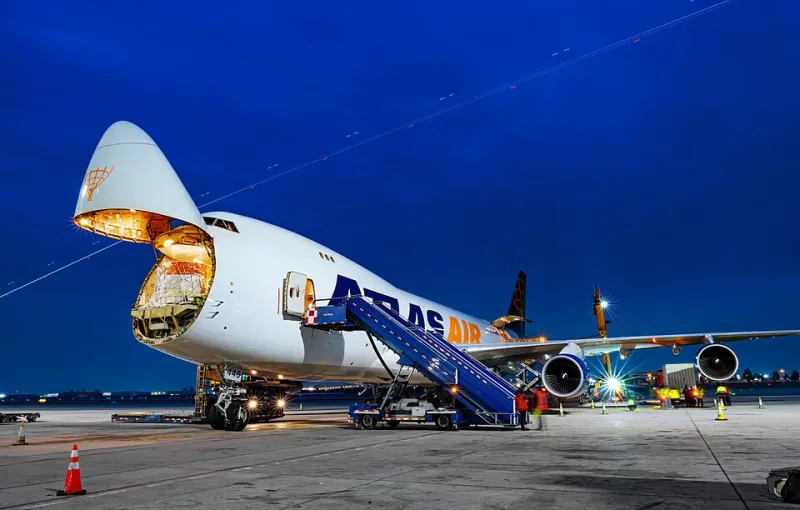
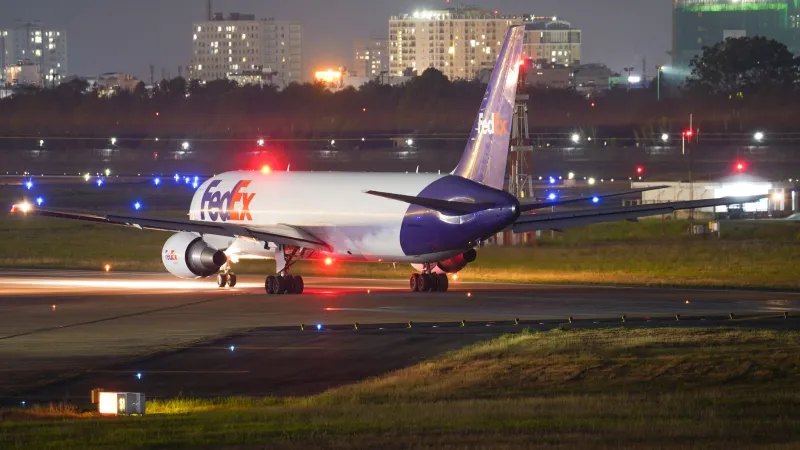
Arturo Merino Benítez International Airport in Santiago handles a substantial volume of time-sensitive cargo, with direct and connecting service to major US freight hubs including Miami, Los Angeles, and New York. Dedicated cargo carriers and the freight divisions of major commercial airlines maintain regular capacity on these routes. A shipment prepared and manifested in Santiago on a Monday morning can, under normal operating conditions, be delivered to a retailer's receiving dock in the continental United States by Wednesday afternoon.
For the right product and the right timing, that speed carries enormous commercial value.
The Retailers Who Have Made the Switch
The category of US retailer most actively adopting express freight from Santiago is not, as one might assume, the luxury segment with unlimited logistics budgets. It is the mid-market e-commerce brand operating in categories where Chilean sourcing is strong — natural and organic food products, artisan home goods, specialty apparel made from Chilean wool or cotton, and certain categories of health and wellness product.
One outdoor apparel brand based in Colorado, sourcing a line of Merino wool base layers from a Chilean manufacturer, restructured its replenishment model after a single season of stockouts cost the company an estimated $180,000 in lost sales. Under the previous model, the company placed large seasonal orders four months in advance and absorbed whatever variance materialized. Under the revised model, the brand maintains a smaller base inventory and uses express freight from Santiago to replenish high-velocity SKUs within a 72-to-96-hour window when sell-through rates exceed forecast.
The per-unit freight cost for express shipments is meaningfully higher than ocean freight. But against the cost of a stockout — lost revenue, customer attrition, potential markdown on overstock ordered to compensate — the math frequently favors speed.
When Express Freight Makes Financial Sense
Not every shipment justifies the premium associated with air express. Understanding when fast-track freight from Santiago creates positive economics requires a clear-eyed look at several variables.
Product value density is the first consideration. Express freight costs are applied on a per-kilogram or volumetric weight basis. Products with high value relative to their weight — specialty food items, premium textiles, electronics components, certain health supplements — absorb freight costs more efficiently than low-margin, high-bulk goods. A retailer moving $80-per-unit artisan goods at 300 grams per unit is working with a very different freight cost equation than one moving $12 kitchen items at 1.2 kilograms each.
Demand volatility is the second factor. Categories where demand is difficult to forecast — products susceptible to social media-driven spikes, seasonal items with compressed selling windows, or goods tied to news cycles and cultural moments — benefit disproportionately from the flexibility that express replenishment provides. The ability to respond to a demand signal within 72 hours rather than 30 days is worth paying for when the cost of being out of stock is high.
Inventory carrying costs round out the calculation. Retailers paying to warehouse large safety stock positions — particularly in high-cost markets like the New York metro area or the Bay Area — may find that reducing safety stock requirements through faster replenishment cycles frees up working capital that more than offsets the premium on express freight.
Practical Guidance for US Retailers Evaluating the Model
For retailers considering express freight from Santiago as part of their replenishment toolkit, several practical steps apply.
First, identify the SKUs — not the entire catalog — where express replenishment would have prevented a stockout or overstock event in the past 12 months. Most retailers find that 10 to 20 percent of their assortment drives 80 percent of their inventory risk. Express freight is a targeted instrument, not a wholesale replacement for ocean freight.
Second, confirm that your Santiago-based supplier or logistics partner can execute on express timelines. Speed at the destination is meaningless if the origin side cannot prepare, document, and manifest a shipment within the required window. A logistics partner with dedicated express operations in Santiago — including relationships with freight carriers and pre-clearance filing capabilities — is essential.
Third, work with your customs broker to establish a standing express entry protocol for shipments from Chile. The US-Chile Free Trade Agreement's preferential duty treatment applies to express shipments as readily as ocean freight, but the documentation requirements must be met with the same precision. Pre-establishing this protocol means that when a replenishment order is triggered, the customs clearance process begins before the aircraft takes off.
The Broader Shift
Express freight from Santiago is not replacing ocean freight. It is supplementing it — giving US retailers a high-speed lane they can activate when the economics justify it and the business situation demands it. The retailers who have integrated this capability into their supply chain thinking describe it less as a logistics upgrade and more as a risk management tool.
In a retail environment where consumer expectations for availability are high and the cost of a stockout is immediate and measurable, the ability to move product from Santiago to a US doorstep in 72 hours is no longer a novelty. It is becoming a baseline competitive requirement for brands that source from Chile and intend to stay ahead of the demand curve.