Before the Border: How Santiago's Pre-Clearance Culture Is Ending Customs Delays Before They Start
For most US importers, the customs process is something that happens to them—an unpredictable gauntlet of holds, queries, and inspections that arrives without warning and departs without apology. The assumption is baked into planning cycles: build in buffer time, budget for potential exams, and hope the shipment clears before a retailer's shelf goes empty or a manufacturer's production line stalls.
That assumption, increasingly, does not hold in Santiago.
Over the past several years, a distinct operational culture has taken root across Santiago's freight and logistics ecosystem—one that treats US Customs and Border Protection requirements not as a destination-side problem but as an origin-side discipline. The result is a measurable reduction in compliance-related delays for US-bound shipments, and a growing number of American importers are beginning to understand why their Santiago corridors perform differently than routes originating elsewhere.
The Compliance Gap That Costs More Than You Think
Customs delays are rarely discussed in terms of their true cost. The direct expenses—storage fees, re-examination charges, potential fines—are visible enough. But the indirect costs are where importers consistently underestimate the damage.
A hold that lasts four business days does not merely delay a shipment by four days. It cascades. Inventory commitments slip. Retailers charge back for late deliveries. Expedited domestic trucking eats into margins to compensate for lost time. In temperature-sensitive or time-critical categories, the damage can be irreversible.
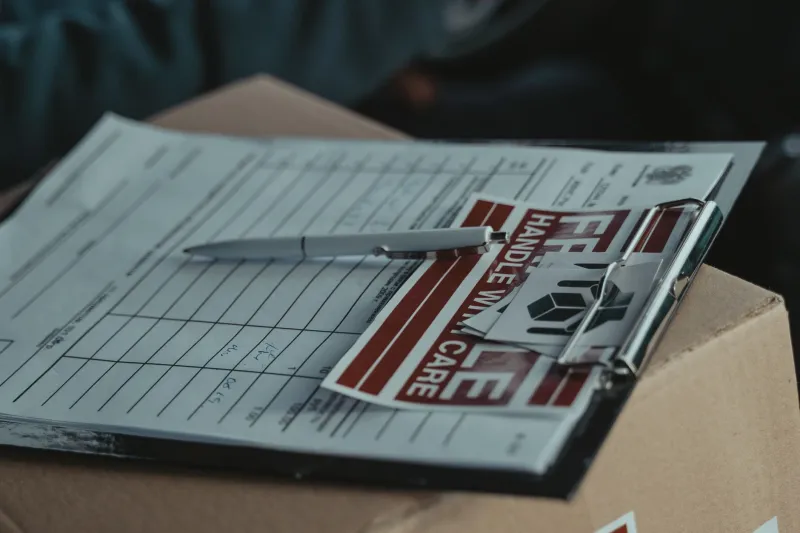
The root cause of most preventable customs delays is not fraud or misclassification in the traditional sense. It is documentation misalignment—commercial invoices that do not precisely reflect packing lists, HTS codes applied inconsistently across shipment lots, country-of-origin declarations that fail to account for transformation rules, and entry data submitted without adequate supporting records. These are administrative failures, and they are almost entirely avoidable with the right preparation at origin.
What Santiago Is Doing Differently
Santiago's freight infrastructure has developed a compliance-forward orientation that distinguishes it from many competing origin points. Several factors converge to explain this.
First, Chile's extensive free trade agreement network—spanning the United States, the European Union, and dozens of other trading partners—has created a professional environment in which customs documentation is treated with genuine technical rigor. Chilean exporters and their logistics partners have decades of experience navigating complex preferential origin rules, and that institutional knowledge transfers directly into US-bound shipment preparation.
Second, Santiago-based freight forwarders and express carriers have invested meaningfully in compliance infrastructure. This includes pre-shipment documentation review protocols, HTS classification verification, and systematic cross-checking of commercial invoices against CBP's Automated Commercial Environment (ACE) entry requirements. The goal is not to react to a customs query—it is to ensure no query is ever generated.
Third, the concentration of logistics expertise in Santiago has created a feedback loop. When a shipment encounters an issue at a US port of entry, that information flows back into origin-side procedures. Documentation templates are refined. Classification decisions are reviewed. Carrier instructions are updated. The system learns, and the error rate declines.
Pre-Clearance as a Competitive Advantage
The phrase "pre-clearance" carries specific regulatory meaning in some contexts—referring to formal CBP programs that allow inspection at foreign airports before departure. What Santiago has developed is something distinct but operationally comparable: a culture of pre-arrival compliance preparation that achieves similar outcomes without requiring formal program enrollment.
Shipments originating through Santiago's logistics network routinely arrive at US ports with documentation packages that are complete, internally consistent, and formatted to CBP's current processing expectations. Entry summaries are filed accurately and on time. Supporting records—certificates of origin, phytosanitary certificates for agricultural goods, FDA prior notice for food shipments—are prepared in advance rather than assembled under pressure after a hold is issued.
The practical effect is that CBP officers processing these entries encounter fewer discrepancies. Fewer discrepancies mean fewer requests for additional information. Fewer requests for additional information mean fewer holds. And fewer holds mean that the importer's supply chain performs as planned.
For US companies managing tight inventory cycles, promotional calendars, or just-in-time production schedules, this is not a marginal improvement. It is a structural advantage.
The Role of Classification Precision
One area where Santiago's compliance culture has demonstrated particular strength is HTS classification—the process of assigning the correct Harmonized Tariff Schedule code to each product in a shipment.
Misclassification is among the most common triggers for CBP scrutiny, and it is frequently unintentional. Product descriptions that are technically accurate but commercially imprecise, components that straddle multiple classification categories, and goods whose manufacturing processes affect their tariff treatment all create classification risk. When that risk materializes at the port of entry, the importer absorbs the consequences.
Santiago-based logistics providers have developed classification review processes that address this risk systematically. For recurring shipment profiles, classification decisions are documented and consistently applied. For new products, pre-shipment classification analysis is conducted before the first entry is filed. When ambiguity exists, binding ruling requests are pursued proactively—a step that many importers defer until after a problem has already occurred.
This level of classification discipline is not universal across international logistics. It reflects a professional standard that Santiago's freight community has adopted, in part because the consequences of misclassification in a high-FTA environment are well understood.
What This Means for US Importers Evaluating Their Options
For US companies currently sourcing through Santiago or considering it as a logistics corridor, the compliance infrastructure described above represents a concrete operational benefit—one that does not always appear in rate comparisons or transit time benchmarks but consistently appears in landed cost calculations.
Importers who have shifted volume through Santiago frequently report a reduction in unexpected customs-related expenses and, perhaps more meaningfully, a reduction in the planning uncertainty that customs friction introduces. When the compliance process is reliable, supply chain planning becomes more precise. Safety stock requirements decrease. Expediting costs decline. The entire operation becomes more efficient.
For those evaluating Santiago against alternative origin or transit points, the question worth asking is not merely what the freight rate looks like on paper. The more revealing question is what the total cost of a customs delay looks like in practice—and how often that cost is currently being absorbed without being fully measured.
Santiago's answer to that question has become increasingly compelling: the best customs delay is the one that never happens, and the work required to prevent it belongs at the origin, not at the border.
STG Express provides express freight and logistics services connecting Santiago, Chile with destinations across the United States. For information on compliance-focused shipping solutions, visit stgoexpress.com.