Freshness Is a Supply Chain Decision: How Santiago's Air Freight Network Is Winning the War on Food Spoilage
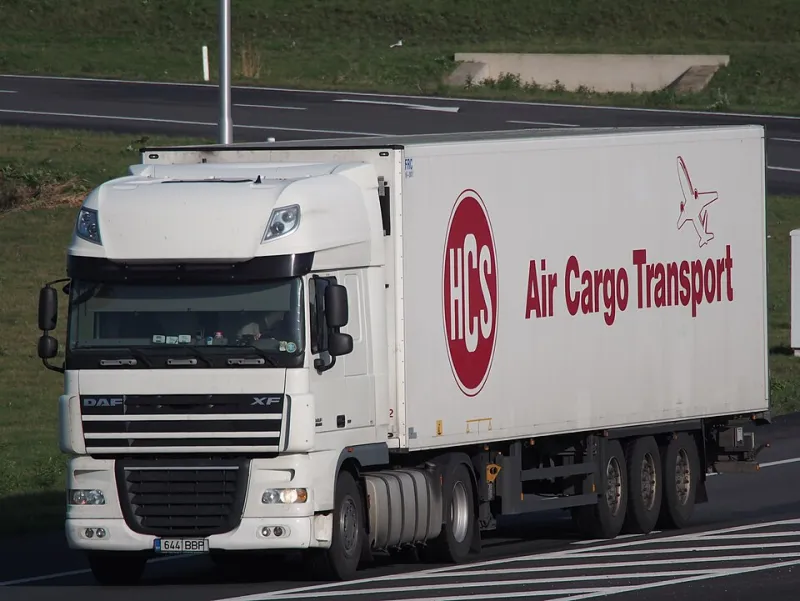
Photo: Alf van Beem, Public domain, via Wikimedia Commons
For US food importers, spoilage is not merely a cost of doing business—it is a supply chain failure with a measurable price tag. Every pallet of blueberries that arrives bruised, every wheel of artisanal cheese that clears customs already past its commercial peak, represents margin that no pricing strategy can recover. The traditional response has been to accept these losses as an inherent feature of long-haul perishable logistics. A growing number of importers, however, are discovering that the problem is not the distance—it is the route.
Santiago's Arturo Merino Benítez International Airport has quietly emerged as one of the most capable perishables gateways in the Western Hemisphere. Its combination of altitude-controlled cold storage, dedicated pharmaceutical- and food-grade cargo terminals, and direct frequency growth toward major US hubs is reshaping what buyers can reliably source from South America—and at what margin.
The Spoilage Equation Nobody Wants to Do
Industry estimates suggest that US importers absorb spoilage rates of between eight and fourteen percent on temperature-sensitive perishables moving through multi-leg consolidated freight models. On a shipment valued at $200,000—a modest volume for a mid-sized specialty produce distributor—that range represents between $16,000 and $28,000 in direct losses per consignment. Annualized across a seasonal program, those figures become structurally significant.
The drivers of spoilage in consolidated models are well understood. Each transfer point introduces a thermal excursion risk. Dwell time at intermediate hubs—often Miami, Los Angeles, or Dallas—adds hours to a journey where hours translate directly into shelf-life erosion. Cold chain documentation becomes fragmented across multiple carriers, making it difficult to identify exactly where a failure occurred, let alone prevent recurrence.
Direct air freight from Santiago to destination US cities eliminates most of these variables. A shipment moving point-to-point from Santiago to Chicago O'Hare, for example, can clear Chilean customs, transit, and arrive at a US importer's receiving dock within 18 to 22 hours under current express corridor schedules. The same cargo routed through a consolidated model with an East Coast hub transfer routinely takes 36 to 52 hours—sometimes longer during peak agricultural seasons when cargo volumes compress available capacity.
What Santiago's Infrastructure Actually Offers
The competitive advantage of Santiago's cargo ecosystem is not simply a matter of geography, though Chile's position as a Southern Hemisphere agricultural powerhouse—producing blueberries, cherries, grapes, avocados, and an expanding portfolio of specialty dairy and charcuterie—creates natural demand density that justifies infrastructure investment.
Arturo Merino Benítez operates dedicated cold cargo facilities capable of maintaining precise temperature bands from -20°C for frozen proteins to 2–8°C for fresh produce and pharmaceutical-grade perishables. The airport's cargo operators have invested substantially in real-time temperature monitoring systems that generate chain-of-custody documentation acceptable to USDA, FDA, and major US retail compliance teams.
Carrier capacity on the Santiago–US corridor has expanded materially in recent years. Belly cargo on passenger widebodies is supplemented by dedicated freighter services, and several carriers have introduced priority perishables programs that guarantee cold-room handling from acceptance through loading—a standard that consolidated models rarely enforce consistently across their entire network.
Case Studies: Where the Numbers Change
Consider the experience of a Pacific Northwest specialty grocer that sources Chilean blueberries during the Northern Hemisphere's off-season. Prior to restructuring its logistics program, the company relied on a consolidated ocean-air hybrid model that delivered product with an average remaining shelf life of seven to nine days upon arrival. After shifting to direct Santiago air freight, the same product arrived with eleven to fourteen days of viable shelf life remaining. The grocer was able to extend its distribution radius, reduce markdowns on near-expiry product, and improve its gross margin on Chilean berries by approximately four percentage points.
A comparable dynamic is visible in the artisanal cheese category. Small-batch producers in Chile's Maule and Los Ríos regions have historically found it difficult to access premium US specialty retail channels precisely because their products could not survive the shelf-life attrition of conventional freight. Direct air corridors through Santiago have changed that calculus. Several importers report that fresh Chilean chèvre and aged sheep's milk varieties are now arriving in New York and San Francisco with sufficient remaining life to justify placement in high-turn specialty retail accounts—a channel that was effectively closed to them under prior logistics arrangements.
The Cost Comparison: Air Freight Versus the True Cost of Consolidated Models
The instinctive objection to direct air freight is cost. Air cargo rates per kilogram are higher than consolidated ocean-air rates on a headline basis, and many importers stop the analysis there. That comparison, however, omits the full cost of spoilage, the markdown risk on product arriving with compressed shelf life, the customer service costs associated with short-dated deliveries, and the reputational damage of inconsistent quality.
When those variables are incorporated into a total landed cost model, the premium associated with direct Santiago air freight frequently narrows to between one and three percent of shipment value—and in some perishables categories, the model inverts entirely. Importers who have completed this analysis consistently report that the decision to move to express air is less a premium purchase than a risk management investment.
Freight cost transparency is also improving. The development of Santiago-based logistics specialists with direct US relationships—including STG Express—has reduced the information asymmetry that historically led importers to underestimate the true cost of their consolidated arrangements.
A Strategic Shift, Not a Tactical Adjustment
What is emerging in Santiago's cargo ecosystem is not simply a faster version of existing perishables logistics. It represents a structural shift in what South American producers can offer US buyers, and what US importers can credibly commit to their retail and foodservice customers.
The ability to guarantee consistent quality, predictable shelf life, and documented cold chain integrity is increasingly a baseline expectation among US grocery chains, specialty retailers, and food distributors. Companies that can meet that standard with Chilean-origin product—and do so at commercially viable margins—are building sourcing advantages that competitors relying on older logistics architectures will find difficult to replicate quickly.
For US food importers still evaluating whether the Santiago corridor merits a serious look, the more relevant question may be how much longer the current model's losses are acceptable to absorb.